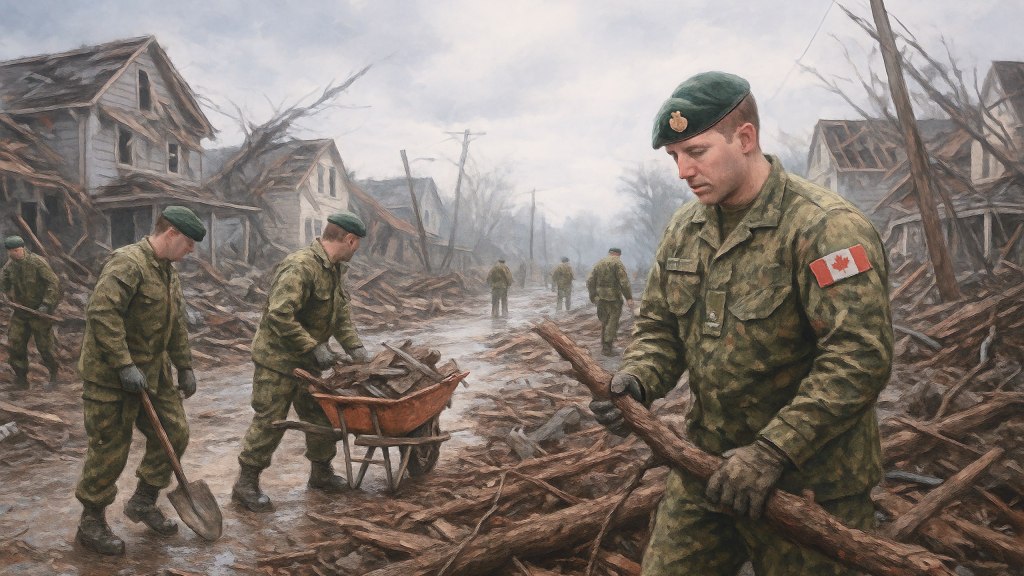
In a recent editorial for the Canadian Science Policy Centre (CSPC), Olivia Caruso and I explored how Canada’s defence spending could play a greater role in building climate-resilient infrastructure. The piece argues that while defence budgets are often viewed solely through the lens of national security, they can also serve as a catalyst for domestic resilience—especially when coordinated with civilian infrastructure investment.
We propose a defence–civilian co-funding mechanism, where federal defence dollars could complement municipal procurement budgets to ensure climate resilience is integrated from the design stage of critical infrastructure projects. This approach would reduce long-term vulnerability and limit the need for costly military disaster response.
The editorial also calls for better alignment between federal defence priorities, public safety objectives, and local infrastructure planning. By bridging these policy areas, Canada could simultaneously advance its climate adaptation goals and strengthen critical systems that underpin both national and community security.
Read the full editorial here.
 Urban Solutions