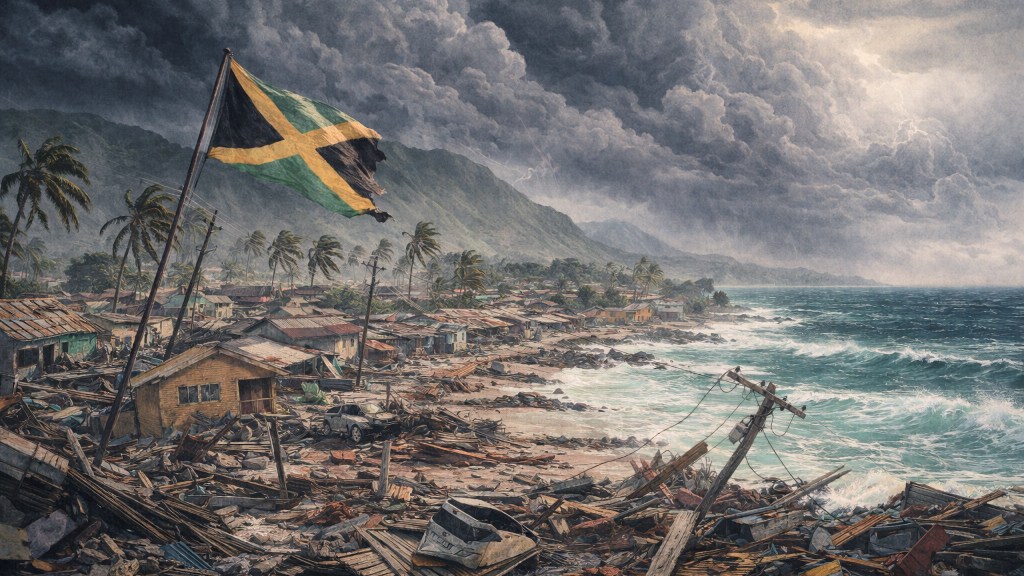
In a recent editorial for the Global Policy Journal, Olivia Caruso and I examined the aftermath of Hurricane Melissa to highlight a recurring challenge in climate adaptation: recovery consistently receives more attention and funding than risk reduction. While rapid post-disaster financing is essential, it often reinforces a cycle where investment only arrives after damage has already occurred.
Using Jamaica’s experience with Hurricane Melissa, we show how tools like catastrophe bonds can provide fast liquidity following a disaster, but do little to reduce exposure beforehand. These mechanisms help governments respond, but they do not prevent loss of life or infrastructure damage when climate risks are already well understood.
The editorial also reflects on how political incentives and public narratives tend to celebrate recovery and community resilience, while downplaying the governance and investment failures that make such resilience necessary in the first place. Without shifting priorities toward proactive risk reduction, communities remain locked into an increasingly costly cycle of response and rebuilding.
Read the full editorial here.
 Urban Solutions