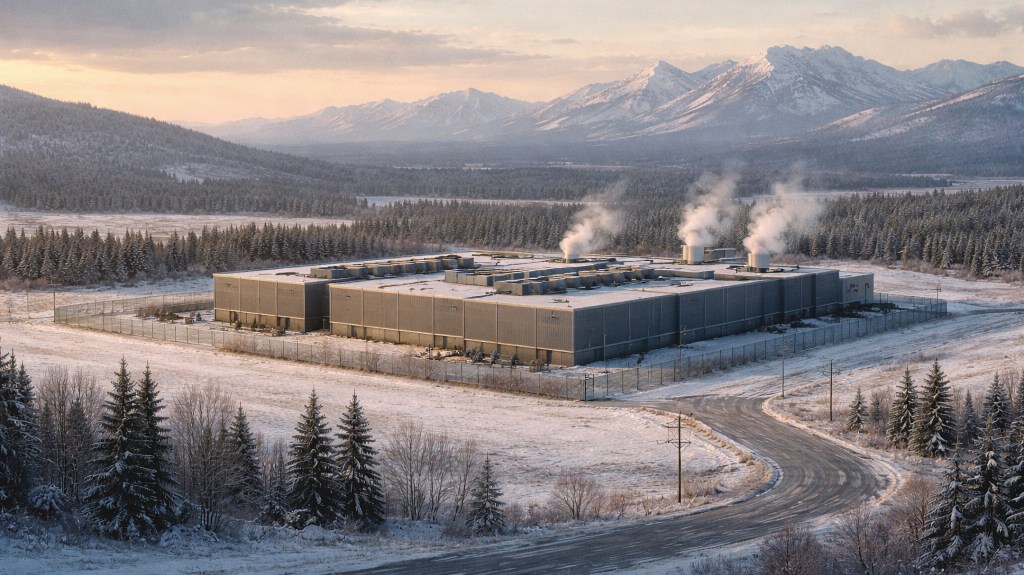
According to reporting by The Narwhal, a large-scale AI data centre is proposed near Olds, positioned as a significant economic development project tied to Canada’s expanding AI infrastructure footprint.
Globally, AI data centre expansion has triggered serious debate. Energy demand is rising sharply. Land requirements are substantial. Emissions implications remain contested. And perhaps most visibly, water consumption for cooling has become a flashpoint, particularly in regions facing water stress.
However, both the proposed data centre and its attached power facility are scheduled to use closed-loop cooling systems.
A relatively new technology in the data centre context, closed-loop systems recirculate water rather than continuously drawing fresh supplies. When properly designed, they can dramatically reduce net water withdrawals compared to traditional evaporative cooling towers. That matters in a policy environment where water intensity has become one of the loudest criticisms of AI infrastructure.
That said, closed-loop systems are not impact-free. They do not require constant large-volume water additions, but they can demand more energy to operate chillers and pumps. The broader sustainability equation still depends on electricity sourcing, system design, and climate conditions.
And this is where geography matters.
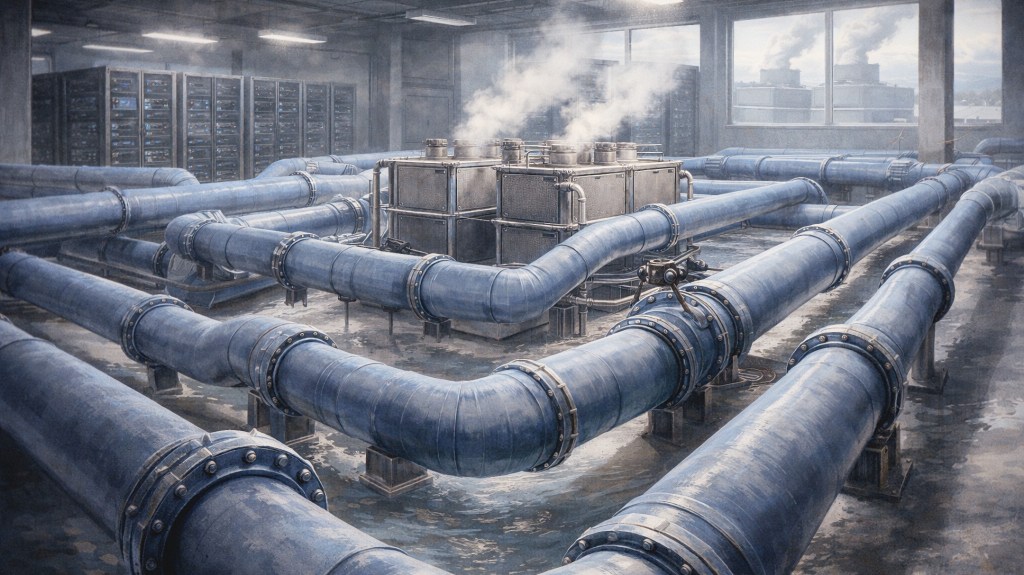
In cooler regions, including much of Canada, facilities can potentially rely on “free cooling” for significant portions of the year, using low ambient temperatures to dissipate heat with far less mechanical chilling. In those contexts, closed-loop systems paired with climate advantages may substantially reduce both water withdrawals and energy intensity.
This is an important reminder that AI infrastructure is not static. It evolves in response to criticism, regulation, and technical constraint. Concerns about water use have been loud and persistent. Engineers are responding. Cooling architectures are changing.
For Canada, there is a strategic opportunity here. As a northern country, long-time U.S. partner, and increasingly active AI investor, Canada is well positioned to host infrastructure that leverages climate advantages to reduce cooling burdens. But that will not happen by default.
Governments funding AI capacity build-out should ensure that facilities are designed to minimize environmental footprints. Closed-loop systems, free cooling integration, and transparent reporting should not be optional design features. They should be baseline expectations.
Progress does not need to be halted. But it should be shaped. And in cases like this, we are seeing in real time how scrutiny can help drive technological evolution in a more sustainable direction.


 Urban Solutions